BLOG IT: LESSON 7/ MANIPULATED IMAGE LESSON
I COULD CREATE MY OWN GLOGSTER ...........AT LAST!!!
the link

I COULD CREATE MY OWN GLOGSTER ...........AT LAST!!!
the link
Browser | Bookmark management | Password managing | Form managing | Search engine toolbar | Per-site security configuration | Auto-updater | |||
No | No | Yes | No | Yes | No | ? | No | No | |
Yes | No | No | Yes | No | Yes | ? | No | ? | |
Yes | Yes | Yes | Yes | No | Yes | ? | Yes | ? | |
Yes | No | Yes | Yes | No | Yes | ? | No | ? | |
Yes | Yes | Yes | Yes | Yes | Yes | ? | No | Yes | |
Partial | No | No | No | No | Partial | ? | No | No | |
Yes | Yes | Partial | No | No | No | Partial | No | No | |
Yes | Yes | Yes | Yes | No | No | No | No | ? | |
Yes | Yes | Yes | No | Yes | Yes | ? | No | Yes | |
Yes | Yes | Yes | Yes | Yes | Yes | Partial | No | Yes | |
Yes | Yes | Yes | No | No | Yes | ? | No | Yes | |
Yes | Yes | Yes | Yes | Yes | Yes | Yes | Yes | Yes | |
Yes | Yes | Yes | Yes | No | Yes | ? | No | ? | |
Yes | Yes | Yes | Yes | No | Yes | Yes | Yes | Yes | |
Yes | Yes | Yes | Yes | Yes | Yes | ? | No | ? | |
Yes | No | Yes | Yes | No | Yes | ? | No | ? | |
Yes | Yes | Yes | Yes | Yes | Yes | ? | No | ? | |
Yes | Yes | No | No | No | No | ? | No | ? | |
Yes | Yes | Yes | Yes | Partial | Yes | Partial | Partial | Yes | |
Yes | No | No | No | No | No | ? | No | ? | |
Yes | Yes | Yes | Yes | Yes | Yes | Yes | Yes | ||
Yes | Yes | No | Yes | Yes | Yes | No | No | No | |
Yes | No | No | No | No | No | ? | No | No | |
Yes | Yes | Yes | Yes | Yes | Yes | Yes | No | Yes | |
Yes | Yes | Yes | Yes | Yes | Yes | Yes | Yes | Yes | |
Yes | Yes | Yes | Yes | Yes | Yes | ? | No | No | |
Yes | Yes | Yes | Yes | ? | Yes | ? | No | Yes | |
Yes | No | No | No | No | No | ? | No | No | |
Yes | Yes | Yes | Yes | Yes | Yes | ? | No | Yes | |
Yes | Yes | No | No | No | No | No | No | No | |
Yes | Yes | Yes | Yes | Yes | Yes | Partial | No | Yes | |
Yes | Yes | Yes | Yes | Yes | Yes | Yes | Yes | Yes | |
Yes | Yes | Yes | Yes | Yes | Yes | Yes | Yes | Yes | |
Yes | Yes | Yes | Yes | Yes | Yes | Partial | ? | Yes | |
Yes | Yes | Yes | Yes | Yes | Yes | ? | Yes | ? | |
Yes | Yes | Yes | Yes | Yes | Yes | Yes | No | Notification only | |
Yes | No | No | No | Yes | No | ? | No | No | |
Yes | No | No | No | No | No | ? | No | No |
I have known Internet Explorer since I first engaged in internet activities. Wherever I have worked in, Internet Explorer has been the default browser. However, I did the experiment I was asked to (change browser for one week), with the idea in mind of confirming my thoughts about the universality, suitability, friendliness of Internet Explorer. I changed by Google Chrome, and you know somthing?...... it was not as bad after all!!!
Google Chrome is livelier in colors and a lot friendlier with Google (THE serch engine I use). I decided to keep on working with it as long as a new browser knocks at my door!

Unfortunately we don’t have interactive whiteboards in either of the two institutions I work for. I read that if you don’t have SMART Notebook on your computer you can download a free viewer. Does anybody know how it works. is it more or less the same as an interactive blackboard? Does it work under the same principle?
However, I have been surfing the net to know more about the topic, and this is what I found:
Even though Powerpoint presentations have existed for some years, it is only in the last five years that their use has become widespread through the introduction of hardware in most high-education institutions. I remember the time when there were only two in the building and we had to book it to use it. Now we have HD TV’s and PC’s in every room!!!
In my classes, I use powerpoint presentations everyday and at everytime. I give them a series of uses:
1) To introduce the topic we will be covering in the unit by making use of picture prediction techniques.
2) To drill grammar particulars where the stimuli appear through the blind animation
3) To hiperlink to my favorite ESL websites, exercises and videos
4) To test them. Are you acquainted with the section PHOTOGRAPHS of the TOEIC exam. I display the photos on the screen and then, ask my students to determine from the four alternatives given, which is closer to the one they are looking at.
We are definetely working with i-generations. Students at present are a hundred percent more visual than what we were when students. Having the option of acquiring knowledge through words or through images, they will always prefer images (only).
I downloaded a complete definition of what the Beaufort Scale was; however, they were a lot more interested in the images depicting the descriptions given by the words.
The exercise was very enriching because students became interested in speaking about their own experiences and feelings regarding traveling in foul weather. It also gave way to laughing and creating a nice environment to work in, specially when we saw the animation of the house being blown away by beaufort scale-12 wind.
As the atmosphere allowed it, we closed down with this video
http://www.visit4info.com/advert/Bud-Light-Abandon-Ship-Budweiser-Lager/37308
Unit Three: In foul weather!
SNAPSHOT:
http://www.metacafe.com/watch/1068104/storm_with_force_10_by_beaufort_scale_in_atlantic_ocean/
STORY:
1) The wind has now reached force 10. The seas are already very high with white crests and the air is white with spray. Captain James has been through many storms. He knows that he will need all his skill and experience to save the ship from damage or loss. There are many important factors to consider - the wind direction and force, the course being steered, the height of the sea, and whether the sea is short or long. In a strong headwind the vessel will pitch. When the wind is abeam the ship, we say that she is rolling. Not only the height but the length of the seas is important.
2) Stability is the ability of a vessel to endure high winds and seas and resist capsizing even if she heels over (or lists) heavily in the wind. Adding weight above a vessel’s centre of gravity will change its stability. If the centre of gravity is raised too much, the vessel will become unstable. As a result, less tilt is needed to capsize the vessel. Removing weight from below the centre of gravity also decreases stability. When the Marina was loaded, the Chief Mate was careful to see that the loading did not decrease the stability of the Marina. If much of the cargo weight is at the bottom of the holds, the centre of gravity is low, and the ship is said to be stiff. The breaking waves then strike the ship’s hull with force and in some cases the hull might even be damaged. On the other hand, if too much cargo has been placed in the ‘tween decks or on the decks, the centre of gravity is high. This makes the ship tender, and she will roll freely and rapidly. Cargo might shift and the ship might start listing. She may then be unable to recover from a roll and capsize.
3) Both wind and sea are now abaft the starboard beam of the Marina, which is rolling heavily in the high seas.
Captain: I think we ought to reduce speed to half speed.
Chief Officer: OK, half speed.
Captain James has reduced speed to save the Marina from being hit too violently by the waves. The storm is now becoming increasingly violent and the Marina is pounding heavily.
Captain: We shall have to heave to. We’ll take her bow to the sea. Hand steering on!
Chief Officer: Very well, hand steering!
Captain: Stand by Engine Room control!
Engine Room Control: Standing by.
Outside there is only the roaring of the wind and the fierce beating of the seas, which are now mountainous, - wind, air and water. Inside the navigating bridge there is only the monotony of the orders to the Engine Room and the strained concentration of the two men.
Captain: Dead slow ahead.
Chief Officer: Dead slow ahead.
Captain: Hard a starboard.
Chief Officer: Hard a starboard.
Captain: Full ahead.
Chief Officer: Full ahead.
Captain: Stop her.
Chief Officer: Stop her.
Captain: Dead slow ahead.
Chief Officer: Dead slow ahead.
Captain: Is she answering the wheel?
Chief Officer: Yes, she is.
PRESENTATION
The Beaufort Scale is an empirical measure for describing wind speed based mainly on observed sea conditions. Its full name is the Beaufort Wind Force Scale.
The scale was created in 1806 by Sir Francis Beaufort, an Irish-born British admiral and hydrographer who succeeded in standardizing the scale based on his observations of the wind behaviour at sea.
Here you will find Admiral Beaufort constructing the scale:
As we have seen before, the Beaufort Scale standardizes the wind speed into 12 categories, from milder to stronger. To see how the wind affects land installations, visit the following website:
http://www.mountwashington.org/education/center/arcade/wind/wind.html
In terms of the effects on the sea, check the following chart:
Beaufort number | Description | Wind speed | Wave height | Sea conditions | Land conditions | Sea state photo |
0 | < 1 km/h | 0 m | Flat. | Calm. Smoke rises vertically. | ||
< 1 mph | ||||||
< 1 kn | 0 ft | |||||
< 0.3 m/s | ||||||
1 | 1.1–5.5 km/h | 0–0.2 m | Ripples without crests. | Smoke drift indicates wind direction, still wind vanes. | ||
1–3 mph | ||||||
1–2 kn | 0–1 ft | |||||
0.3–1.5 m/s |
2 | 5.6–11 km/h | 0.2–0.5 m | Small wavelets. Crests of glassy appearance, not breaking | Wind felt on exposed skin. Leaves rustle, vanes begin to move. | |||
4–7 mph | |||||||
3–6 kn | 1–2 ft | ||||||
1.6–3.4 m/s | |||||||
3 | 12–19 km/h | 0.5–1 m | Large wavelets. Crests begin to break; scattered whitecaps | Leaves and small twigs constantly moving, light flags extended. | |||
8–12 mph | |||||||
7–10 kn | 2–3.5 ft | ||||||
3.4–5.4 m/s | |||||||
4 | 20–28 km/h | 1–2 m | Small waves with breaking crests. Fairly frequent white horses. | Dust and loose paper raised. Small branches begin to move. | |||
13–17 mph | |||||||
11–15 kn | 3.5–6 ft | ||||||
5.5–7.9 m/s | |||||||
5 | 29–38 km/h | 2–3 m | Moderate waves of some length. Many white horses. Small amounts of spray. | Branches of a moderate size move. Small trees in leaf begin to sway. | |||
18–24 mph | |||||||
16–20 kn | 6–9 ft | ||||||
8.0–10.7 m/s | |||||||
6 | Strong breeze | 39–49 km/h | 3–4 m | Long waves begin to form. White foam crests are very frequent. Some airborne spray is present. | Large branches in motion. Whistling heard in overhead wires. Umbrella use becomes difficult. Empty plastic garbage cans tip over. | ||
25–30 mph | |||||||
21–26 kn | 9–13 ft | ||||||
10.8–13.8 m/s | |||||||
7 | 50–61 km/h | 4–5.5 m | Sea heaps up. Some foam from breaking waves is blown into streaks along wind direction. Moderate amounts of airborne spray. | Whole trees in motion. Effort needed to walk against the wind. | |||
31–38 mph | |||||||
27–33 kn | 13–19 ft | ||||||
13.9–17.1 m/s | |||||||
8 | Gale, | 62–74 km/h | 5.5–7.5 m | Moderately high waves with breaking crests forming spindrift. Well-marked streaks of foam are blown along wind direction. Considerable airborne spray. | Some twigs broken from trees. Cars veer on road. Progress on foot is seriously impeded. | ||
39–46 mph | |||||||
34–40 kn | 18–25 ft | ||||||
17.2–20.7 m/s | |||||||
9 | 75–88 km/h | 7–10 m | High waves whose crests sometimes roll over. Dense foam is blown along wind direction. Large amounts of airborne spray may begin to reduce visibility. | Some branches break off trees, and some small trees blow over. Construction/temporary signs and barricades blow over. | ||
47–54 mph | ||||||
41–47 kn | 23–32 ft | |||||
20.8–24.4 m/s | ||||||
10 | Storm | 89–102 km/h | 9–12.5 m | Very high waves with overhanging crests. Large patches of foam from wave crests give the sea a white appearance. Considerable tumbling of waves with heavy impact. Large amounts of airborne spray reduce visibility. | Trees are broken off or uprooted, saplings bent and deformed. Poorly attached asphalt shingles and shingles in poor condition peel off roofs. | |
55–63 mph | ||||||
48–55 kn | 29–41 ft | |||||
24.5–28.4 m/s | ||||||
11 | 103–117 km/h | 11.5–16 m | Exceptionally high waves. Very large patches of foam, driven before the wind, cover much of the sea surface. Very large amounts of airborne spray severely reduce visibility. | Widespread damage to vegetation. Many roofing surfaces are damaged; asphalt tiles that have curled up and/or fractured due to age may break away completely. | ||
64–72 mph | ||||||
56–63 kn | 37–52 ft | |||||
28.5–32.6 m/s | ||||||
12 | Hurricane-force | ≥ 118 km/h | ≥ 14 m | Huge waves. Sea is completely white with foam and spray. Air is filled with driving spray, greatly reducing visibility. | Very widespread damage to vegetation. Some windows may break; mobile homes and poorly constructed sheds and barns are damaged. Debris may be hurled about. | |
|
Now that you already know all about Beaufort Scale, let’s take a look at the following announcmeent: http://mvvaldivia.glogster.com/accident-glog/
TRY IT OUT: LESSON 16/MY WIKI PROJECT
In the link below, I have left an open question for my students to investigate and to contribute. They would have to research on different causes causing vessels to capsize. Once they determine the cause, they would have to illustrate it with one example, indicating why, when, where, what type of cargo/vessel it affected, etc.
http://imoteacher.pbworks.com/w/page/32879449/capsizing
I COULD CREATE MY OWN GLOGSTER ...........AT LAST!!!
the link
Blog: Derivative of "weblog." A series of entries to an online journal, posted in some chronological order. Sometimes used, incorrectly, by writers to describe discussion forums or even all websites not affiliated with offline publishers. A blog can be written by an individual or a group. It can allow comments to entries or not.
http://uk3.hotpotatoes.net/ex/61710/IHWGQQXU.php
This exercise was created for Unit 9 from Touchstone Student’s Book 3.
something like this encouraged me to specialize in maritime english
Technology takes education out of the four walls enclosing the traditional classroom. Through the internet, digital projection and slides, my students are connected to the world via material that is not meant to replace the textbook, but to enlighten it!
There are many reasons to justify the use of technology in my classes:
Specifically, in my classes I use:
My challenge:
My dream:
To substantiate my syllabus competely with online interactve activities for my students
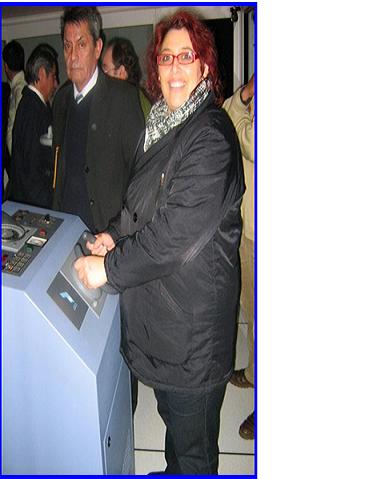
Hola! Mi nombre es María Verónica Valdivia S., felizmente casada por 20 años, chilena, 46 años, un hermoso hijo -que heredó de su madre el infinito gusto por los idiomas.
Soy capacitadora, especialista en el ámbito del negocio naviero y el comercio exterior, Diplomada en Capacitación y en Enseñanza del Inglés para Propósitos Específicos y miembro del Colegio Nacional de Capacitadores A.G. e instructora OMI 6.09 (Título otorgado por la Armada de Chile a través de Directemar)
Aparte de mi vasta experiencia como capacitadora, me he desarrollado también como docente en la Educación Superior en diversas instituciones:
Universidad Andrés Bello. Carreras de Ingeniería en Transporte Marítimo y Marina Mercante, Menciones Puente y Máquina0
Fundacion DUOC UC. Programa Transversal de inglés a todas las carreras impartidas en la sede de Valparaíso.
Pontificia Universidad Católica de Valparaíso. Carreras de Ingeniería en Ejecución Mecánica e Ingeniería Civil Mecánica.
Universidad de Viña del Mar
Universidad de Aconcagua
Universidad de las Américas
He prestado servicios a las mejores y más reconocidas empresas relacionadas al Comercio Exterior y al Transporte Marítimo del país y de la zona, entre ellas:
Empremar
Southern Shipmanagement (Chile)
SAAM Crewing
Compañía Sudamericana de Vapores
SAAM
Del Monte Fresh Produce
A.J. Broom
Lauritzen Reefers
South Pacific Logistics
Marítima Altisol
Servicio Nacional de Aduanas (Regional Santiago y Regional Valparaíso)
Hempel, Pinturas marinas e Industriales
Específicamente, he realizado labores de:
Detección de necesidades, elaboración de malla curricular y creación de programas de entrenamiento, organización de cursos mediante una prueba diagnóstica pertinente y estandarizada, capacitación a personal terrestre y flota (oficiales y tripulación), para finalizar midiendo el impacto de la capacitación en cuanto a un correcto desempeño laboral en conexión al inglés.
Preparación de flota (oficiales y tripulantes) para que rindan las pruebas internacionales de colocación en el ámbito naviero: MARLINS y SEAGULL.
Selección de personal. Detección del nivel lingüístico en inglés de un candidato y determinación de sus potencialidades para desarrollar una segunda lengua con capacitación adecuada y su costo estimado.
Dentro de mis fortalezas se encuentran:
Captar con exactitud las necesidades de capacitación en inglés al interior de una organización y actuar con flexibilidad para alcanzar las metas propuestas.
Reconocimiento de la cultura y la estructura organizacional para levantar un proyecto de capacitación coherente y sustentable en el tiempo con impacto inmediato en el desempeño laboral del capacitado.
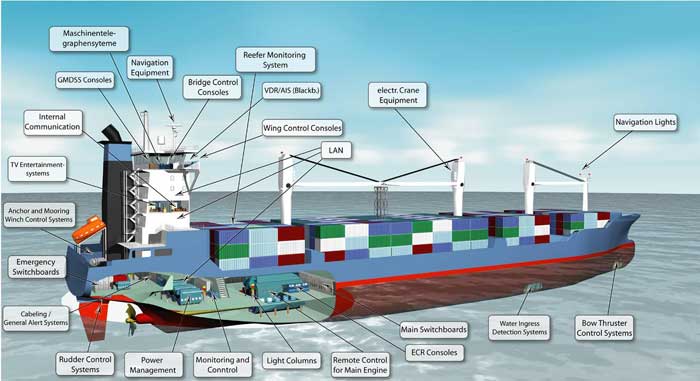
The regulations about the use of English language on maritime settings, with a compulsory character, established by the International Maritime Organization, which are reflected on Standards of Training, Certification and Watchkeeping Code 78/95 (STCW 78/95), are the main source of information that allow us to know how are the language needs of non- English speaking seafarers to develop their professional duties. At sight of such competence minimums, maritime English should mainly have a communicative purpose. Communication here meets survival and safety matters.
On the other hand, on a ship or in a harbour, listening skills are used three more times than speaking skills, and four or five more times than writing and reading skills(Plucinska, 2003: 1). Seafarers need practice in listening in many different types of communication, including formal and informal conversations; VHF radio communications; telephone conversations; travel announcements and radio reports.
Oral communication is one of the most important requirements for all seafarers as well. They should be able to communicate with other ships and coast stations and perform the officers duties also with a multilingual crew, including the ability to use and understand different varieties and accents.
Although the proper command of English language is basic to develop professional duties on board, due to international nature of maritime trade and the multiculturalism and multilingualism of crews, communications problems can affect ship safety, both directly as source of maritime accidents where one or more ships are involved, or indirectly because of the stress and workload derived from lack of understanding amongst crew members which at the same time- can affect their work performance.


